

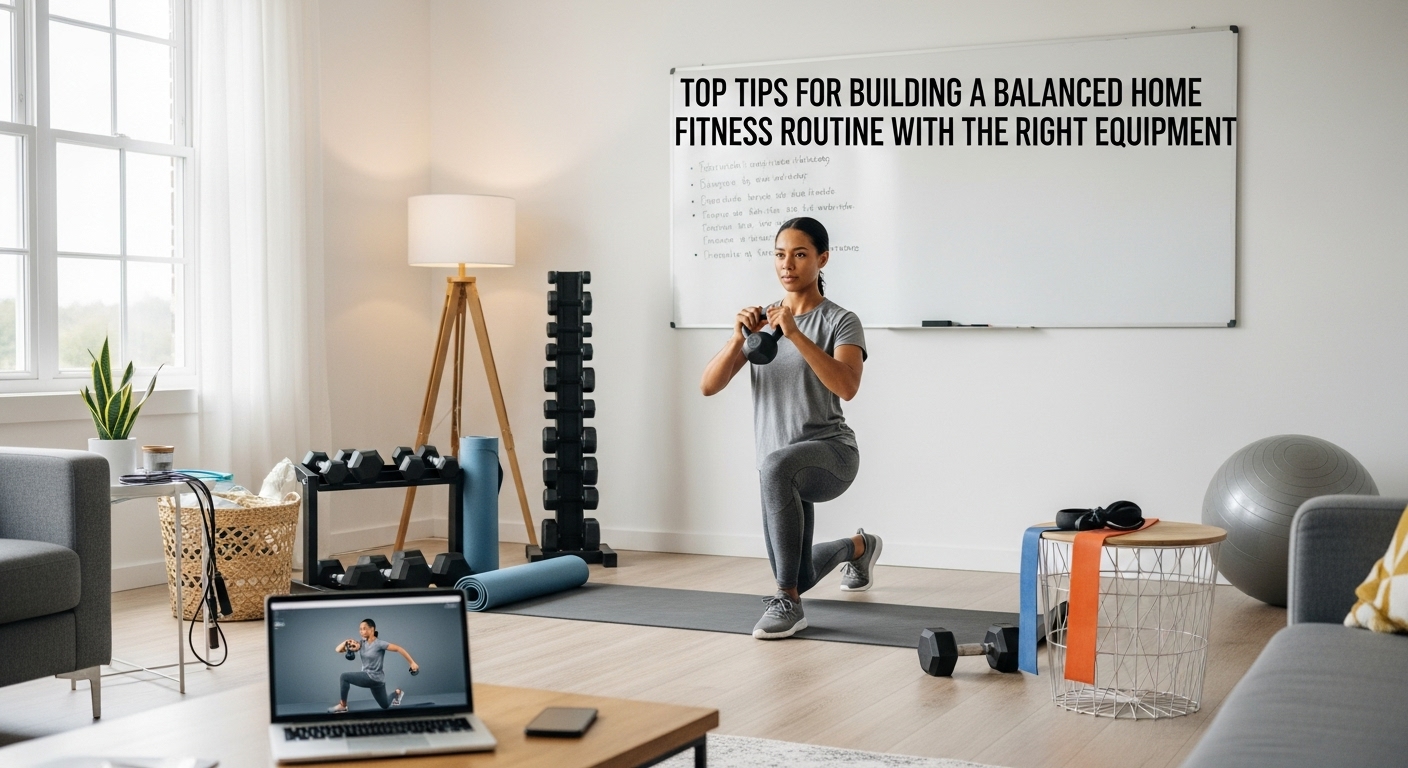
Building a home fitness routine sounds simple at first. Buy a few pieces of equipment, clear a bit of space, and you’re ready to go. But many people quickly discover that without the right balance, workouts either become repetitive, uncomfortable, or hard to stick with long-term.
A balanced home fitness routine isn’t about having the most equipment or following complicated programs. It’s about choosing tools that support different types of movement, fit your lifestyle, and make exercise feel like a natural part of your day rather than a chore.
This guide walks you through practical tips to build a routine that feels sustainable, effective, and enjoyable—using real-world examples that make the choices easier to understand.
Start With Balance, Not Intensity
One common mistake people make when setting up a home gym is focusing too heavily on one type of exercise. Some go all-in on cardio, while others load up on strength equipment and ignore mobility altogether.
Think of your fitness routine like a balanced meal. You wouldn’t eat only protein or only vegetables every day. Your body needs a mix, and movement is no different. A well-rounded routine usually includes:
- Strength training for muscle and bone health
- Cardio for heart and lung fitness
- Mobility or flexibility work to keep joints moving well
You don’t need separate rooms or expensive setups for each category. A few versatile pieces of equipment can support all three when chosen thoughtfully.
This is similar to how offices design workspaces. A good office isn’t just desks—it includes seating, lighting, and quiet areas to support different tasks. Your fitness space should work the same way.
Choose Equipment That Matches Real Life
The best fitness equipment is the kind you actually use. Before buying anything, consider how your day really looks—not how you hope it might look someday.
If you have short workout windows, equipment that’s quick to set up matters. If you live in a small space, compact or foldable gear makes it easier to maintain consistency. If multiple people share the space, adjustability becomes important.
For example:
- Resistance bands are easy to store and great for strength and mobility.
- Adjustable dumbbells save space while offering progression.
- Cardio machines with simple controls are more likely to be used regularly.
This mirrors decisions made in other industries. In commercial kitchens, tools are chosen not just for performance but for speed and efficiency during busy hours. At home, convenience often determines whether a routine sticks.
Understanding the basics of physical fitness also helps clarify why variety matters. Different systems in the body adapt to different types of movement, and balance supports long-term health rather than short bursts of motivation.
Build Around Versatility, Not Volume
You don’t need a crowded room full of machines to train effectively. In fact, too much equipment can feel overwhelming and lead to decision fatigue.
Versatile equipment supports multiple exercises and adapts as your strength and endurance improve. A single adjustable bench, for instance, can support pressing, seated exercises, and core work. Free weights can be used for strength, balance, and even cardio-style circuits.
This approach is similar to choosing multipurpose tools in everyday life. A high-quality blender that handles multiple tasks often gets more use than single-function gadgets that take up space.
Focus on:
- Equipment that supports multiple movements
- Items that can scale with your progress
- Pieces that feel intuitive and comfortable
Quality and versatility almost always beat quantity.
Don’t Overlook Comfort and Safety
Comfort plays a bigger role in consistency than most people realize. Equipment that feels awkward, unstable, or uncomfortable creates small barriers that add up over time.
Good flooring protects joints and reduces noise. Proper grip and padding prevent strain. Stable equipment builds confidence, especially when training alone.
In shared households, safety is even more important. Equipment should be easy to adjust and suitable for a range of body types and experience levels. This is why gyms invest heavily in user-friendly designs—when people feel safe, they’re more likely to return.
Comfort isn’t about luxury. It’s about removing friction so movement feels natural rather than forced.
Make Space Work for You
Your workout area doesn’t need to look like a professional gym. It just needs to feel inviting and functional.
Natural light, clear walkways, and organized storage can make a big difference. When equipment is easy to access and put away, it’s easier to start workouts—even on low-energy days.
This is similar to how people design reading corners or work-from-home spaces. When the environment supports the activity, motivation follows more naturally.
Midway through building a well-rounded setup, many people explore complete fitness solutions through Oli Joy Fitness to see how different equipment categories can work together to support strength, cardio, and flexibility in one cohesive space.
Progress Slowly and Adjust as You Go
A balanced fitness routine evolves. What works in the first month may need adjustment later as strength increases or goals change.
Choose equipment that allows progression without forcing immediate upgrades. Adjustable resistance, modular designs, and scalable options help your routine grow with you.
This mindset is common in business and education. Systems are built to adapt rather than remain fixed, because growth is expected. Your home fitness routine deserves the same flexibility.
Consistency Comes From Simplicity
The most effective home fitness routines are often the simplest. They remove unnecessary complexity and focus on repeatable habits.
When equipment is easy to use, comfortable, and fits your space, workouts feel less like a task and more like a normal part of your day. Over time, that consistency leads to better results than short bursts of intense effort followed by long breaks.
Balanced fitness isn’t about perfection. It’s about steady movement, supported by equipment that works with your life—not against it.
A Smarter Way to Build a Home Routine
Building a balanced home fitness routine starts with thoughtful choices. By focusing on versatility, comfort, and real-life usability, you create a setup that supports strength, cardio, and mobility without overwhelming your space or schedule.
The right equipment doesn’t just help you exercise—it helps you show up consistently. And in fitness, consistency is what truly makes the difference.