

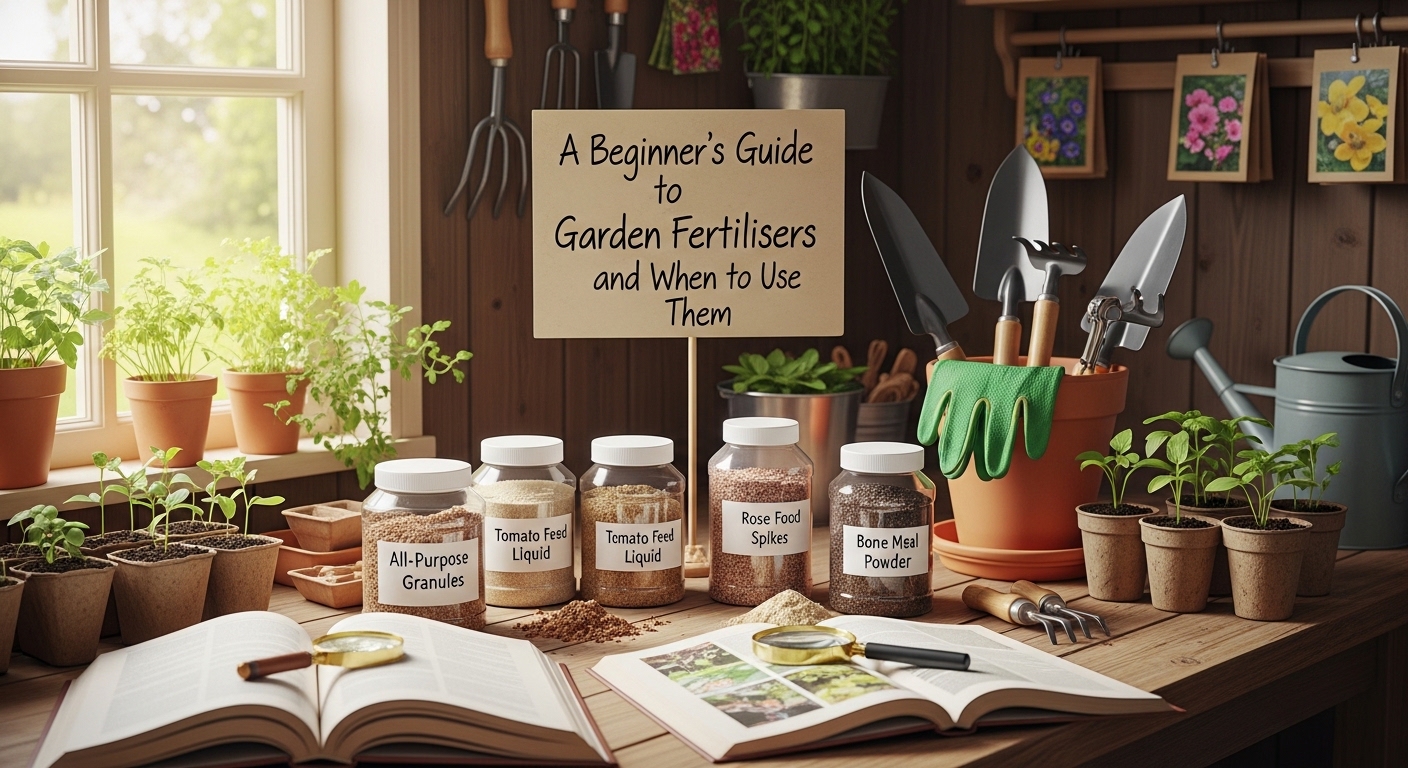
If you’re new to gardening, fertilisers can feel confusing. Walk into any garden centre, and you’ll see rows of products labeled with numbers, plant types, and promises of “lush growth” or “bigger blooms.” It’s easy to wonder: Do I really need all this?
The good news is that fertilising doesn’t have to be complicated. Once you understand the basics—what fertilisers do, what those numbers mean, and when to apply them—you can make confident choices that help your plants thrive.
Let’s break it down step by step.
What Fertilisers Actually Do
Plants need nutrients to grow, just like people need food. While soil naturally contains nutrients, they can become depleted over time—especially in home gardens where plants are constantly growing, flowering, and being harvested.
The three primary nutrients in most fertilisers are:
- Nitrogen (N) – supports leafy growth
- Phosphorus (P) – encourages root development and flowering
- Potassium (K) – improves overall plant strength and disease resistance
You’ll often see these listed as three numbers on a fertiliser package, like 10-10-10. That ratio indicates how much of each nutrient is included.
If you’re curious about how nutrients move through soil and into plants, understanding the basics of a fertilizer can help make sense of why balanced feeding matters.
Think of fertiliser as a supplement. It doesn’t replace good soil, sunlight, and water—but it supports healthy growth when those basics are already in place.
Different Types of Garden Fertilisers
Not all fertilisers are created equal. Choosing the right one depends on what you’re growing and how quickly you want results.
Granular Fertilisers
These come in small pellets that you spread over the soil. They slowly break down with watering and release nutrients over time.
Granular fertilisers are ideal for lawns, garden beds, and shrubs because they provide consistent feeding over weeks or months.
For example, if you’re preparing a vegetable patch for the season, a slow-release granular fertiliser helps nourish plants steadily without frequent reapplication.
Liquid Fertilisers
Liquid fertilisers are diluted in water and applied directly to the soil or leaves. They act quickly, delivering nutrients fast.
These are great for:
- Potted plants
- Flowering annuals
- Plants showing signs of nutrient deficiency
If your tomato plant looks pale or slow-growing, a liquid feed can provide a quick boost.
Organic Fertilisers
Organic options are made from natural materials like composted manure, seaweed, or plant-based ingredients.
They improve soil structure while feeding plants, making them popular among gardeners who prefer eco-friendly methods.
Organic fertilisers tend to release nutrients more gradually and support long-term soil health.
When Should You Fertilise?
Timing matters just as much as the product itself.
Spring: The Growth Kickstart
Spring is one of the most important times to fertilise. Plants are waking up from dormancy and preparing for new growth.
Applying fertiliser in early spring supports:
- Lawn recovery
- Flowering plant development
- Vegetable seedling growth
This is similar to fueling up before a workout—plants need energy before their busiest season.
Summer: Supporting Ongoing Growth
During summer, plants are in full growth mode. However, high heat can stress them.
Light feeding during summer helps maintain strength, especially for fruiting vegetables and flowering plants. Just be cautious not to over-fertilise, as this can burn roots in hot conditions.
Autumn: Preparing for Rest
Autumn fertilising focuses on strengthening roots before winter.
For lawns, this helps them survive colder months and bounce back quickly in spring. For perennials, it supports root health during dormancy.
Avoid heavy fertilising in winter, as most plants slow their growth and won’t use nutrients efficiently.
Matching Fertiliser to Your Plants
Different plants have different needs.
- Leafy vegetables like spinach benefit from nitrogen-rich fertilisers.
- Flowering plants prefer balanced or phosphorus-focused blends.
- Lawns often require specific lawn formulas designed for turf.
- Native plants may need low-phosphorus fertilisers.
Imagine feeding a marathon runner the same diet as a weightlifter. Both are athletes, but their needs differ. Plants are no different.
Reading product labels carefully ensures you’re giving your plants exactly what they need.
If you’re exploring options for different plant types and want to see the range available for various garden situations, you can buy online to compare fertiliser types and match them to your specific gardening goals.
Seeing the full range helps clarify what fits your space best.
Avoiding Common Beginner Mistakes
Fertilising is helpful—but too much can cause problems.
Here are common mistakes to avoid:
- Over-fertilising, which can burn roots
- Applying fertiliser to dry soil without watering
- Using the wrong formula for specific plants
- Fertilising during extreme heat
A simple rule: follow instructions carefully and start conservatively. You can always add more later, but fixing over-fertilisation is harder.
Also, remember that healthy soil forms the foundation. Compost, mulch, and proper watering practices work alongside fertilisers for the best results.
A Practical Example
Let’s say you’ve just planted a small backyard vegetable garden.
You prepare the soil with compost, then apply a balanced granular fertiliser before planting. As your vegetables grow, you supplement with a light liquid feed every few weeks.
Mid-season, your tomatoes begin flowering. You switch to a fertiliser slightly higher in potassium to support fruit development.
By adjusting feeding based on plant stage, you support consistent growth and better harvests.
This step-by-step approach keeps things manageable.
Final Thoughts
Fertilisers don’t need to feel overwhelming. By understanding basic nutrient roles, choosing the right type for your plants, and applying them at the correct time of year, you set your garden up for success.
Start with simple goals. Feed in spring, support during active growth, and strengthen roots before winter. Pay attention to plant signals—yellowing leaves or slow growth often indicate nutrient needs.
Gardening is a learning process. Each season teaches you more about what works in your specific space.
With a little knowledge and the right products, you’ll soon find that feeding your garden becomes second nature—and your plants will reward you with vibrant growth, strong roots, and healthy blooms.