

Calculus is one of the most influential branches of mathematics, providing a framework for understanding how quantities change and accumulate. Whether describing the motion of planets, predicting population growth, optimizing business profits, or training artificial intelligence models, calculus serves as a fundamental tool across numerous disciplines. Developed independently by Sir Isaac Newton and Gottfried Wilhelm Leibniz during the seventeenth century, calculus revolutionized mathematics and continues to shape scientific and technological advancement.
The subject is primarily divided into two interconnected branches: differential calculus, which studies rates of change, and integral calculus, which focuses on accumulation. Together, these branches enable mathematicians, scientists, engineers, and economists to solve problems involving continuously changing quantities.
The Foundation: Limits
The concept of a limit is the cornerstone of calculus. A limit describes the value that a function approaches as its input approaches a specific point. Rather than focusing solely on a function’s value at a point, limits examine its behavior nearby.
Limits are essential because they provide rigorous definitions for derivatives and integrals. They also help evaluate functions that may be undefined at certain points and are crucial for studying infinite sequences and series.
For example, when analyzing the behavior of a moving object at an exact instant, limits allow mathematicians to determine instantaneous velocity by considering average velocities over increasingly smaller intervals.
Continuity
A function is continuous if there are no interruptions, jumps, or holes in its graph. Intuitively, a continuous function can be drawn without lifting the pencil from the paper.
Continuity plays a central role in calculus because many important theorems require functions to be continuous over a given interval. Continuous functions exhibit predictable behavior, making them suitable for differentiation and integration.
Understanding continuity helps mathematicians analyze real-world systems where abrupt changes are absent, such as fluid flow, temperature variation, and population growth.
Differential Calculus
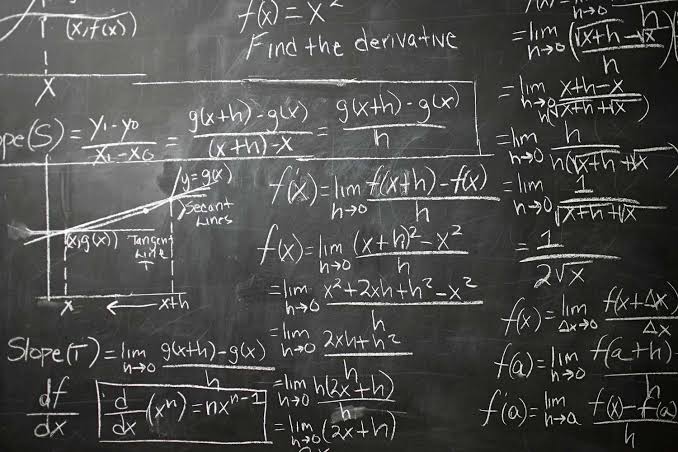
Differential calculus examines how functions change. Its principal concept is the derivative, which measures the instantaneous rate of change of one variable with respect to another.
Geometrically, the derivative represents the slope of the tangent line to a curve at a particular point. A positive derivative indicates increasing behavior, while a negative derivative indicates decreasing behavior.
Differential calculus answers questions such as:
- How fast is a car moving at a particular instant?
- At what point does a company’s profit reach its maximum?
- How rapidly is a disease spreading?
- How quickly is a chemical reaction occurring?
To simplify differentiation, mathematicians use several important rules, including:
- Constant Rule
- Power Rule
- Product Rule
- Quotient Rule
- Chain Rule
These rules allow derivatives of complex functions to be calculated efficiently.
Applications of Derivatives
Derivatives have countless practical applications.
In physics, derivatives describe velocity, acceleration, force, and momentum.
In economics, they determine marginal cost, marginal revenue, and marginal profit.
In engineering, derivatives optimize machine performance, structural designs, and manufacturing processes.
In computer science, derivatives play an essential role in optimization algorithms used for machine learning and artificial intelligence.
Biologists use derivatives to model population dynamics, while meteorologists use them to study examples include finding the area beneath a curve, the volume of a three-dimensional object, total distance traveled, or the amount changing weather conditions.
Integral Calculus
While derivatives measure rates of change, integrals measure accumulation.
Integral calculus is concerned with determining quantities that build up over time or space. Common examples include finding the area beneath a curve, the volume of a three-dimensional object, total distance traveled, or the amount of work performed by a force.
There are two primary types of integrals.
Definite Integrals
A definite integral computes the exact accumulated value over a all antiderivatives of a function. Because differentiation and integration are inverse operations, indefinite integration effectively specified interval. It has fixed upper and lower limits and produces a numerical result.
Definite integrals are widely used in engineering, economics, and physics to calculate areas, probabilities, and total quantities.
Indefinite Integrals
An indefinite integral determines the family of all antiderivatives of a function. Because differentiation and integration are inverse operations, indefinite integration effectively reverses differentiation.
Several methods are available for solving integrals, including:
- Substitution
- Integration by Parts
- Partial Fraction Decomposition
- Trigonometric Substitution
- Numerical Integration Techniques
Each method is suited to different classes of mathematical problems.
The Fundamental Theorem of Calculus
The Fundamental Theorem of Calculus establishes the profound connection between differentiation and integration.
It demonstrates that integration can be reversed through differentiation and vice versa. This theorem transforms many difficult area calculations into relatively straightforward evaluations of antiderivatives.
Its discovery unified the two major branches of calculus into a single coherent mathematical theory.
Infinite Sequences and Series
Calculus extends beyond derivatives and integrals to study infinite sequences and infinite series.
A sequence is an ordered list of numbers, while a series is the sum of those numbers.
Important series include:
- Geometric Series
- Harmonic Series
- Power Series
- Taylor Series
- Maclaurin Series
Taylor and Maclaurin series approximate complex functions using polynomials. These approximations are fundamental in scientific computing, engineering simulations, and numerical analysis.
Multivariable Calculus
Many practical problems involve more than one independent variable. Multivariable calculus extends single-variable calculus to higher dimensions.
Topics include:
- Partial derivatives
- Multiple integrals
- Gradient vectors
- Directional derivatives
- Jacobian matrices
- Vector fields
- Divergence
- Curl
These concepts are indispensable in fluid mechanics, electromagnetism, economics, and machine learning.
Differential Equations
Differential equations combine derivatives with unknown functions to model changing systems.
Examples include:
- Population growth
- Heat conduction
- Electrical circuits
- Epidemic transmission
- Mechanical vibrations
- Planetary motion
- Financial forecasting
Many scientific laws are naturally expressed as differential equations, making them one of the most important applications of calculus.
Optimization
Optimization is among the most valuable applications of calculus.
Organizations use optimization techniques to:
- Maximize profits
- Minimize production costs
- Improve manufacturing efficiency
- Design safer structures
- Reduce fuel consumption
- Optimize transportation routes
Modern machine learning algorithms also rely heavily on optimization methods derived from differential calculus.
Real-World Importance
Calculus influences nearly every scientific and technological discipline.
Engineering: Structural analysis, robotics, aerospace design, and electrical engineering.
Physics: Classical mechanics, quantum mechanics, thermodynamics, and relativity.
Economics: Market. By introducing concepts such as limits, continuity, derivatives, integrals, infinite series, multivariable functions, and differential equations, calculus enables us to understand indispensable discipline. Mastering its concepts not only strengthens mathematical reasoning but also equips learners with analytical tools analysis, pricing models, investment strategies, and forecasting.
Medicine: Drug dosage optimization, medical imaging, epidemiological modeling, and biomedical engineering.
Computer Science: Artificial intelligence, computer graphics, data science, image processing, and algorithm optimization.
Environmental Science: Climate prediction, pollution control, and ecosystem modeling.
Conclusion
Calculus Concepts is much more than a collection of mathematical techniques—it is a universal language for describing change. By introducing concepts such as limits, continuity, derivatives, integrals, infinite series, multivariable functions, and differential equations, calculus enables us to understand and solve complex problems across science, engineering, economics, medicine, and technology.
As society continues to embrace data-driven innovation and scientific discovery, calculus remains an indispensable discipline. Mastering its concepts not only strengthens mathematical reasoning but also equips learners with analytical tools that are essential for addressing real-world challenges and advancing human knowledge.